
At an age when many children are still discovering what they want to become, Yasin Waiwai Justin Taban, popularly known as Kuanga, is already finding his place in agriculture. After observing activities at a PRO Seed Ltd. demonstration farm, he took home maize seedlings removed during thinning, planted them and eventually harvested food for his family. His story is a reminder that an interest in farming can begin with something as simple as a curious mind and a willingness to try.
For 12-year-old Yasin Waiwai Justin Taban, farming is not just something adults do. It is an opportunity to grow food, contribute to his family’s well-being and, perhaps, build something of his own.
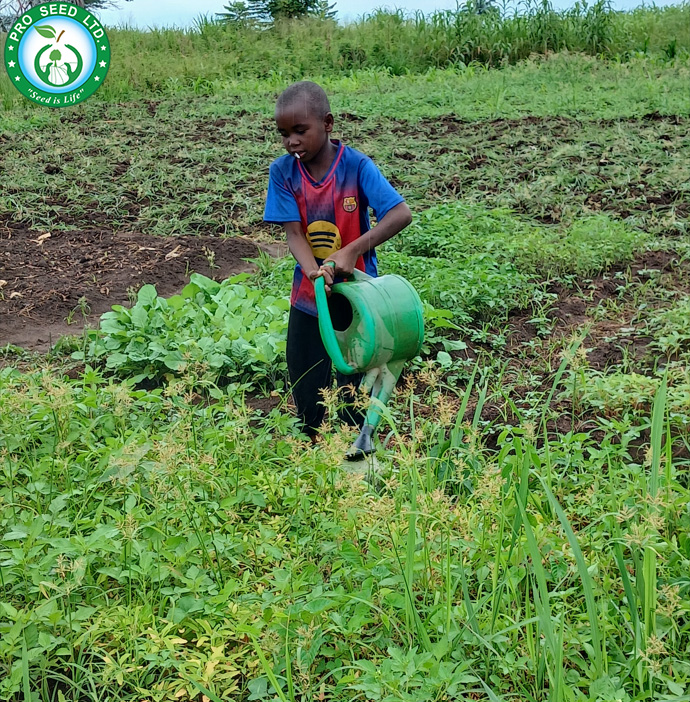
His interest did not begin with a formal farming lesson or an instruction from an adult. It began with observation.
While farmers and a Production Officer were carrying out routine field activities at one of PRO Seed Ltd.’s demonstration farms, Yasin noticed something happening in the maize field. Some seedlings were being removed from the planting stations. To those carrying out the activity, this was part of normal crop management. To Yasin, however, the removed seedlings presented an opportunity.
He collected some of them and quietly took them home, where he planted them.
Nobody had instructed him to do so. It was his own decision, inspired by what he had observed at the demonstration farm.
That small decision would eventually produce something tangible: maize that he and his family could eat.
Yasin’s story first came to our attention through his mother, Rhoda Justin Taban, who was profiled in the Farmers’ Voice article published on 1 October 2026. During that interview, she spoke about her son’s decision to plant maize after observing farming activities at one of PRO Seed’s demonstration farms.
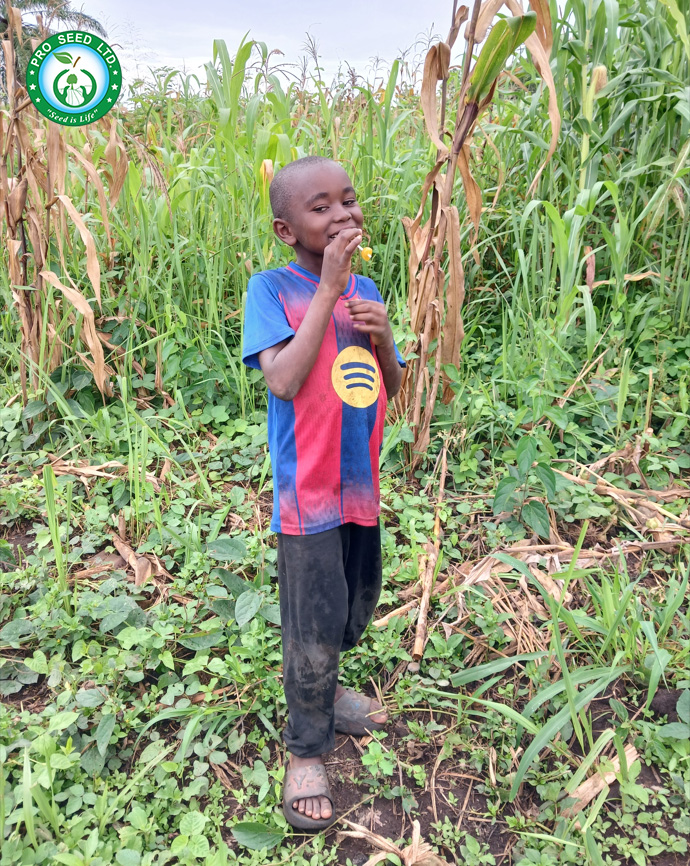
We subsequently caught up with Yasin to hear the experience from the young farmer himself.
Shy and modest in his responses, Yasin did not offer an elaborate explanation of what had motivated him. When asked why he collected the seedlings that had been removed and decided to plant them at home, his answer was straightforward.
“Because I wanted to eat the maize when it grows,” he said.
There was no complicated business plan behind his decision, no immediate ambition to become a commercial farmer and no instruction from his mother. He simply wanted to grow maize that he could enjoy with his family.
Asked who he intended to share the harvest with, he responded: “With my mom and siblings.”
For Yasin, the prospect of eating maize that he had planted himself was reward enough.
From the demonstration farm to the family table
The practice that caught Yasin’s attention is known as thinning. It involves removing excess, weak or overcrowded seedlings from a planting station or row to give the remaining plants sufficient space, light, water and nutrients to develop properly.
It is an important crop management practice, particularly where more seedlings have emerged than are required at a planting station.
Yasin, however, saw beyond the immediate purpose of the exercise. He noticed that seedlings being removed from the field could still be put to another use. Rather than leaving them behind, he collected some and gave them a chance to grow elsewhere.
The seedlings he planted eventually matured, and the family got to eat the maize.
His experience may appear modest, but it reveals something important about agricultural learning: exposure to farming activities can encourage people to observe, ask questions and experiment with what they have learnt. In Yasin’s case, observation translated into action without anyone having to tell him what to do.
When the conversation turned to whether he had considered selling some of the maize to raise money for school fees, his response revealed just how simple his original motivation had been.
“I do not want to sell the maize. I just want to eat,” he said.
It was an honest answer from a young boy whose immediate interest was not commercial gain but having food that he had grown himself.
His response also offered a glimpse into how he understands the value of farming. For him, the harvest was not measured in money but in the opportunity to share something he had produced with his mother and siblings.
Yet his thinking is already beginning to evolve.
Asked whether he would repeat the experience, Yasin said he would. This time, however, he has a bigger harvest in mind.
“Yes, this time I will pick so that I can have enough maize for me and my mom and she will sale the remaining ones,” he explained.
The response suggests that while eating the maize remains important to him, he is also beginning to appreciate that farming can provide something beyond household consumption. A portion of the harvest could be sold, giving the family an additional benefit.
A young farmer with bigger ambitions
Yasin’s interest in agriculture does not end with the maize he has already harvested.
According to his mother, he has asked to be allocated a feddan of land and supported with land clearing so that he can grow maize in the next planting season.
It is an ambitious request for a 12-year-old, particularly one whose first experience of planting maize began with a handful of seedlings collected during thinning.
His mother also says that he does not like studying. While this is part of her account of her son’s interests, what is clear from his actions is that he has developed an enthusiasm for practical farming and wants more opportunities to pursue it.
For now, he is preparing another piece of land, this time with plans to transplant tomatoes. It is another indication that his interest is not limited to the maize he first planted. He is already looking towards a different crop and another opportunity to grow something.
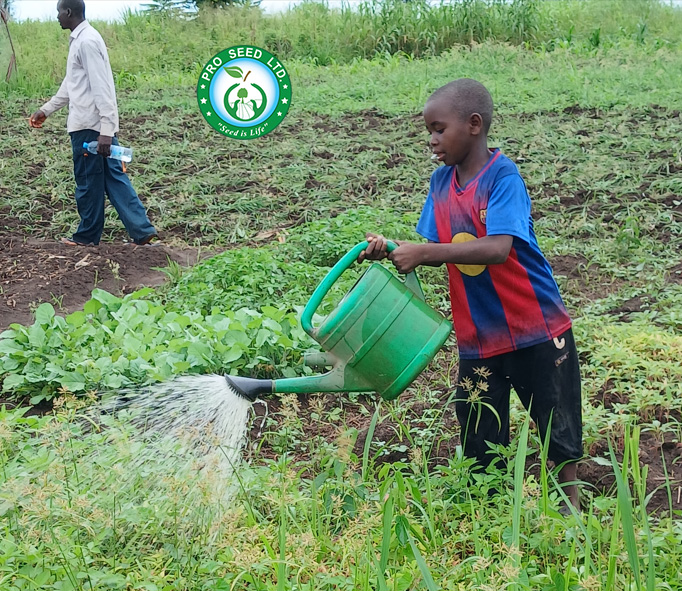
Whether this early enthusiasm will develop into a lifelong agricultural pursuit remains to be seen. At 12, Yasin has plenty of time to explore his interests, acquire new skills and discover where his abilities may take him.
What his experience demonstrates, however, is that young people can engage meaningfully with agriculture when they are exposed to it and given room to participate.
Agriculture has room for every generation
Yasin’s story is a small but meaningful example of how agricultural knowledge and enthusiasm can spread beyond the demonstration field. What begins as a practical activity among farmers can become a learning opportunity for someone simply watching from the sidelines.
A demonstration farm is not only a place where farmers observe crop varieties, planting techniques and recommended agricultural practices. It can also inspire curiosity among children and other members of the community who may not initially be part of the farming activity.
Yasin observed. He made a decision. He planted. And he harvested.
His experience should not be mistaken for a recommendation to replant seedlings removed during thinning as a standard crop management practice. Thinning serves an important purpose in ensuring that the remaining plants have adequate growing space and resources. Rather, his story highlights the initiative of a young person who saw an opportunity in an activity he had witnessed.
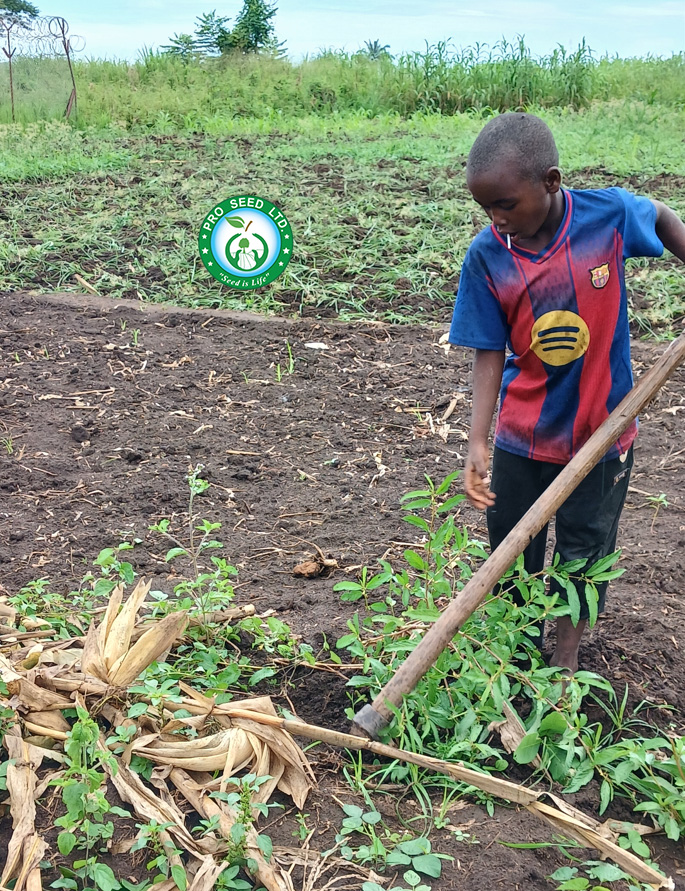
There is also a wider lesson for households and communities: introducing children to agriculture does not always require formal training or elaborate programmes. Opportunities to observe, participate safely and learn from experienced farmers can help nurture an early appreciation of food production.
For PRO Seed Ltd., whose work includes supporting farmers through quality seeds, agricultural knowledge and field demonstrations, stories such as Yasin’s illustrate the wider influence that practical agricultural engagement can have within communities.
At 12, Yasin may not yet have a clear picture of what his future in agriculture will look like. But he has already demonstrated curiosity, initiative and a willingness to put an idea into practice.
His first maize harvest has given him a reason to plant again. His next ambition is a larger piece of land, more maize for his family and, this time, something to sell as well.
And while many people may have walked past the seedlings removed during thinning without giving them another thought, Yasin saw something different.
To him, there was still an opportunity.
Because sometimes, the next generation of farmers begins not with a field of their own, but with the simple decision to plant a seedling.