
By Alan Clement
Communications Officer, PRO Seed Ltd.
Feature Friday | The People Behind PRO Seed
A company is easy to describe on an organogram: boxes, lines, departments, reporting order. What the chart cannot show is that all of it has to happen in the same week — seed going into the ground at Yambio, a truck moving grain to Nesitu, a training session running in Maridi, an invoice clearing in Juba, a customer waiting on a delivery promised for Thursday.
Agriculture is usually explained through seasons: plant, tend, harvest, sell. But a value-chain business does not experience the season as a sequence. It experiences it as several things happening at once, each dependent on something else arriving on time.
As PRO Seed Ltd expands from certified hybrid seed into Maize Flour and Tamam Animal Feeds, those dependencies have multiplied. A seed company can absorb a delay. A company that farms, transports, mills, sells and trains cannot — because every one of those functions is now the input to another.
Holding that together is Wudu Justine, PRO Seed’s Operations Manager. His work is not the visible part of agriculture. He is not in the field or on the mill floor; he is at the joints which include the handovers where one team’s finished work becomes another team’s starting condition. It is precisely where things go wrong, and where nothing gets credit for going right.
Operational failure is rarely dramatic. It is a vehicle that leaves two hours late, a store record that does not match the stock, a decision waiting on a signature. What makes such things serious is the distance they travel: by the time the consequence lands, it is no longer an internal problem; it is a farmer standing at a collection point that no one came to.
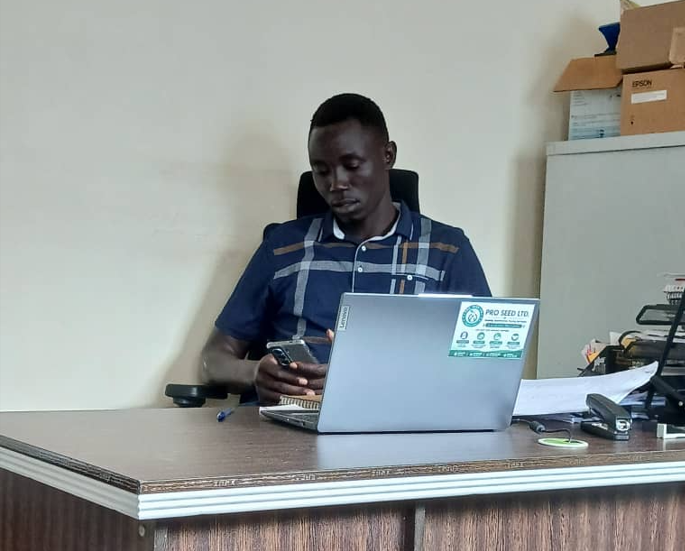
When the Season Arrives All at Once
Ask Justine where the pressure concentrates, and he does not hesitate. “The most complicated part is logistics,” he says.
“Starting from the farming up to the last chain, the most important thing is the movement of raw materials, especially seeds to the farmers. If it is affected, it will affect up to the last chain.”
The logic is unforgiving. “When the farmers happen to delay getting the seeds to plant, it means they will not farm in time, and the end result of the whole process in milling will also delay.” One late dispatch at the top of the chain does not stay there; it travels, gathering cost, until it surfaces at the mill and the market weeks later.
The Harvest That Never Comes Back
Because the damage surfaces far from its source, Justine has learned to read the early signs and for a seed company, the clearest is the harvest that never comes back. Seed leaves the store for the farmers and returns as neither grain nor repayment, and he has watched that single failure hollow out the business before, cancelling purchase orders in the days when seed was all PRO Seed sold.
“You really realise it is starting to fracture when you fail to get the produce from the farmers,” he says. “You gave out seeds and you are unable to get back what they produced — that is the starting point.”
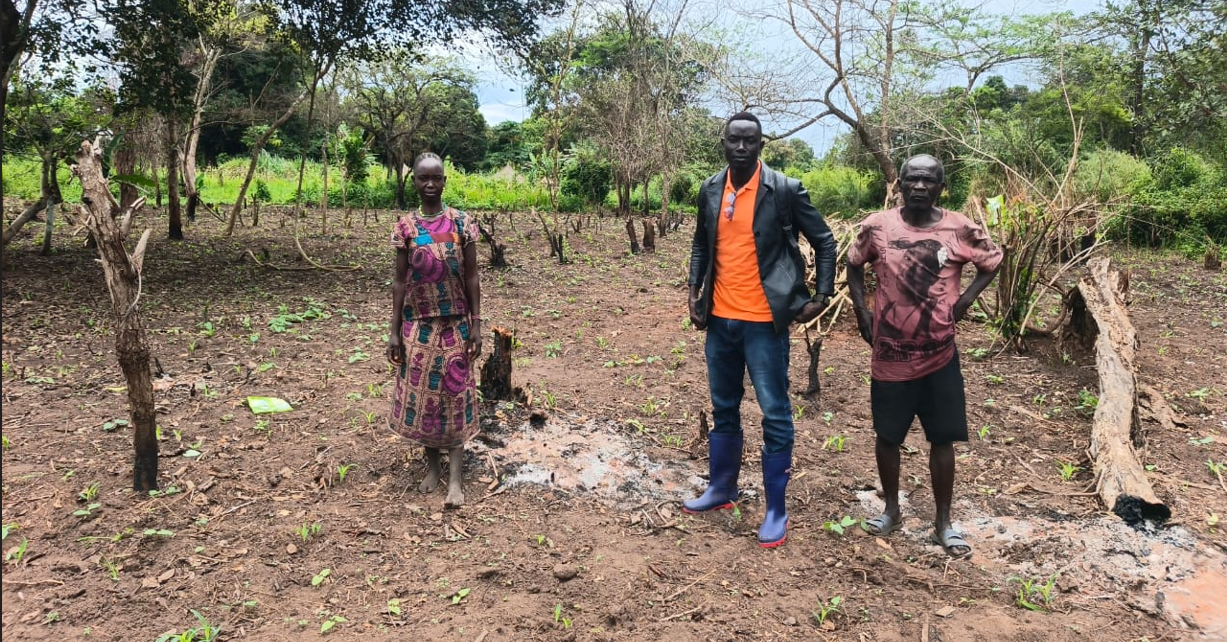
The healthy version of the same cycle is just as visible. When seed goes out on schedule, the fields are monitored from planting through to harvest, and the training turns into strong yields, the grain and seed flow back to PRO Seed as they should. For Justin, the surest proof is the farmers’ own surplus:
“When they realise they have a lot of production, that is when you know something is going on.”
The Cleaner Who Moved the Market
Justine returns, again and again, to one word: system. “PRO Seed is like a system. We start from farming, but before farming we already have sales and marketing people on the ground to get the farmers’ needs. The moment any department breaks down, it affects the whole thing.”
That belief reaches further than the senior roles. He tells a story that changed how the company plans to sell its flour. “The MD once asked a cleaner about the flour they buy at home. She told him they buy the one-kilogram pack scooped into white containers, and she explained the price. When the MD thought about it, he realised that selling even a small pack is more profitable than selling the bigger packs.”
A pricing insight, he points out, came from the one person most companies would never think to ask.
“That cleaner became important. It means everyone in any process at PRO Seed becomes important — including the guards and the drivers, who are now doing the logistical work.”
Turning a Weakness into a Truck
The move from seed into milling taught him something about managing growth that no forecast could. “It taught me consistency. If you are not consistent in this business, it would be hard. In seed production we used to stay some months without new business, and we kept pushing.” Persistence alone, though, was not enough. “You also need new ideas. When we realised seed production was leaving us somehow floating, it brought us to the idea of milling which we thought was a good idea.”
The same pressure reshaped operations. Logistics, once the company’s weakness, forced a decision. “When we got those challenges, we had to convert them into positive outcomes. That is why we had to get a truck for ourselves.” Farming followed the same path.
“We used to face low output from farmers. It taught us a lesson — why keep farmers in subsistence farming using traditional methods? That is why we developed the idea to bring tractors to the farmers.”
The Three Voices That Cannot Go Silent
If logistics is the hardest problem, communication is the one that quietly decides the rest. “The whole system works together, so without communication it becomes hard,” Justine says. He maps the chain that fails first:
“Sales and marketing has to bring the business. Procurement has to know what clients and business are coming, because the deliveries are done by procurement. And supply chain has to know the first and second process, because what is procured has to be supplied continuously. If these three do not communicate, it confuses the whole process.”
His remedy is deliberately low-tech. “When it breaks down, the most important thing is to make them sit down and talk about a good communication system among all departments.”
A Sector Still Gambling on Seed
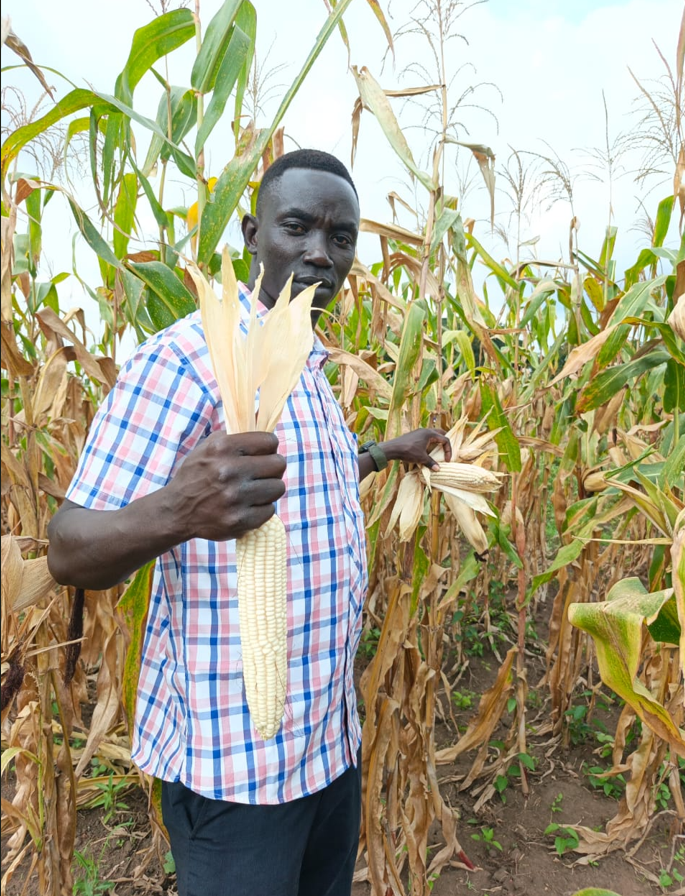
Pressed on what he would fix in the wider sector, Justin points past the company gate to the ground the whole industry stands on. He wants the government to back agriculture in earnest by supplying good seed and, above all, building a system to certify it. South Sudan has none, he notes; farmers plant a mix of traditional seed and certified stock imported from neighbouring countries, with no guarantee of what will actually come up.
“People are just gambling. That is the truth of the matter.”
For the young employee walking into all this motion, Justin’s advice is to start at the beginning — not with a department or a title, but with the shape of the whole company, from where the seed is produced to where that journey ends. Learn the chain first, he insists, and every other role falls into place.
“The first thing to understand is the seed.”
And the tagline “If you ate today, thank a farmer”, he treats not as a slogan but as a hierarchy. Beef, flour, a vegetable: whatever ends up in the stomach, he argues, begins with the person who grew it, which is why the farmer must come first in everything PRO Seed does.
“Without food there is no life, and the first person to produce that food is the farmer.”
It is a fitting creed for a man whose job is to ensure that when one department stumbles, the farmer never feels it.