
By Alan Clement
Communications Officer, PRO Seed Ltd.
Feature Friday | The People Behind PRO Seed
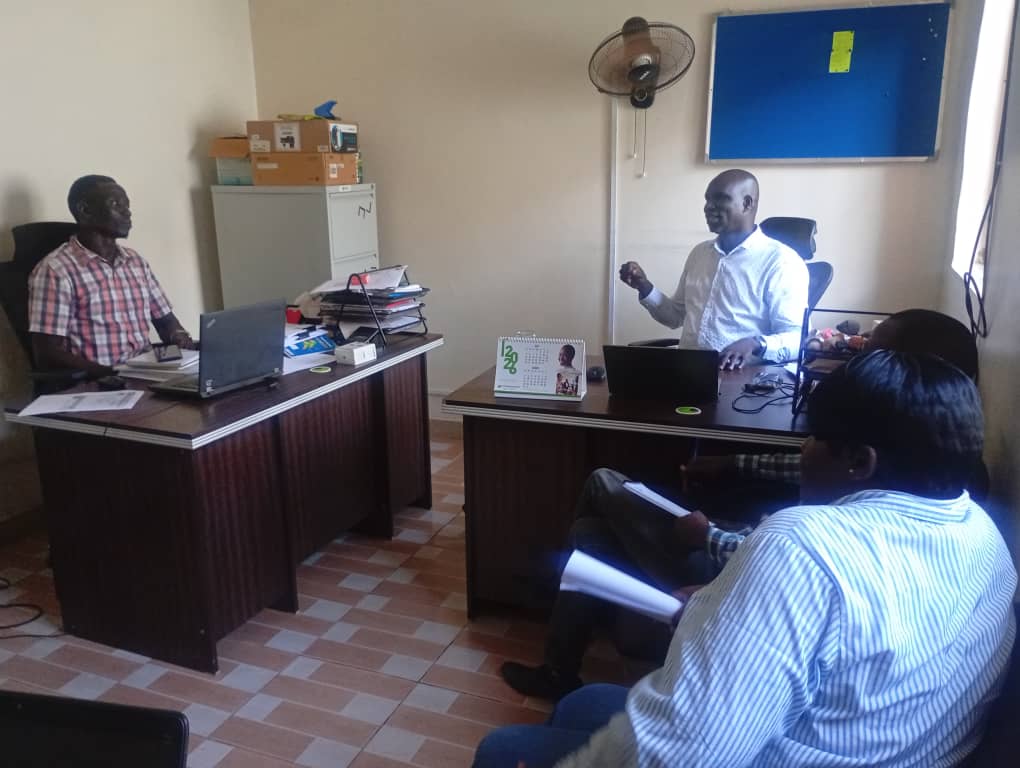
Woja Isaac Enoch, Managing Director of PRO Seed Ltd (C) in a discussion with his team | Alan
Across a wooden desk stacked with notebooks, an active laptop, the atmosphere in the room feels less like a corporate executive office and more like a tactical briefing room.
Behind the simple, grounding mantra painted across PRO Seed’s corporate identity sits a clear executive philosophy: every bag of grain moving through a mill represents a human life touched on both ends of the supply chain.
Leaning forward, with animated hands cutting through the quiet office hum, Woja Isaac Enoch, Managing Director of PRO Seed Limited, lays out a premise that challenges traditional industry thinking: agriculture in South Sudan can no longer be treated as a story of mere survival—it must be engineered as a profitable business.
It is this conviction that drove the company’s expansion beyond producing Macista and Bazooka Hybrid Seeds to building across the value chain through Hagana Maize Flour and Tamam Animal Feeds. In a candid dialogue at the company’s headquarters, the Managing Director reflects on the journey from early seed trials to a multi-product agribusiness, grounding macro-level growth in human-centred terms.
To Woja, phrases like “value chain addition” are not just buzzwords for annual reports, but the direct mechanism through which field agronomists, milling machine operators and local growers earn a dignified living.
This operational drive serves a dual purpose: building consumer trust in locally manufactured goods while signaling corporate maturity to international partners. Competing on retail shelves alongside imported brands requires strict quality control, reliable logistics and tight cross-departmental coordination—from storekeepers to sales leads.
By establishing this integrated approach under one roof, Woja Isaac is taking a direct stance on the future of South Sudanese commerce; proving that, given the right infrastructure and vision, local industry can deliver products that stand equal to any import.
A Business Built Around a Bigger Chain
The logic behind that expansion, Woja explained, was born from a difficult reality. PRO Seed began as a seed company in 2018, contracting farmers to produce seed, which the company would buy, process and take to market. But the limitations of the seed market quickly became clear.
The company struggled to sell its seeds in a market where commercial and certified seed use remained limited. At the same time, Woja says, the wider maize value chain was not sufficiently connected: seed producers, grain farmers and millers were operating without a strong link between them.
“We realized that for any seed industry to thrive, the value chain of that crop should be fully developed.”
That realization changed the direction of the business. If farmers were going to buy improved seed, they needed a reason to produce more grain. If they were going to produce more grain, they needed confidence that someone would buy it. And if the company could create that market through milling, the different stages could reinforce one another.
That is the thinking behind PRO Seed’s move into grain markets and milling—and behind the company’s plan to turn maize into Hagana Maize Flour and Tamam Animal Feeds.
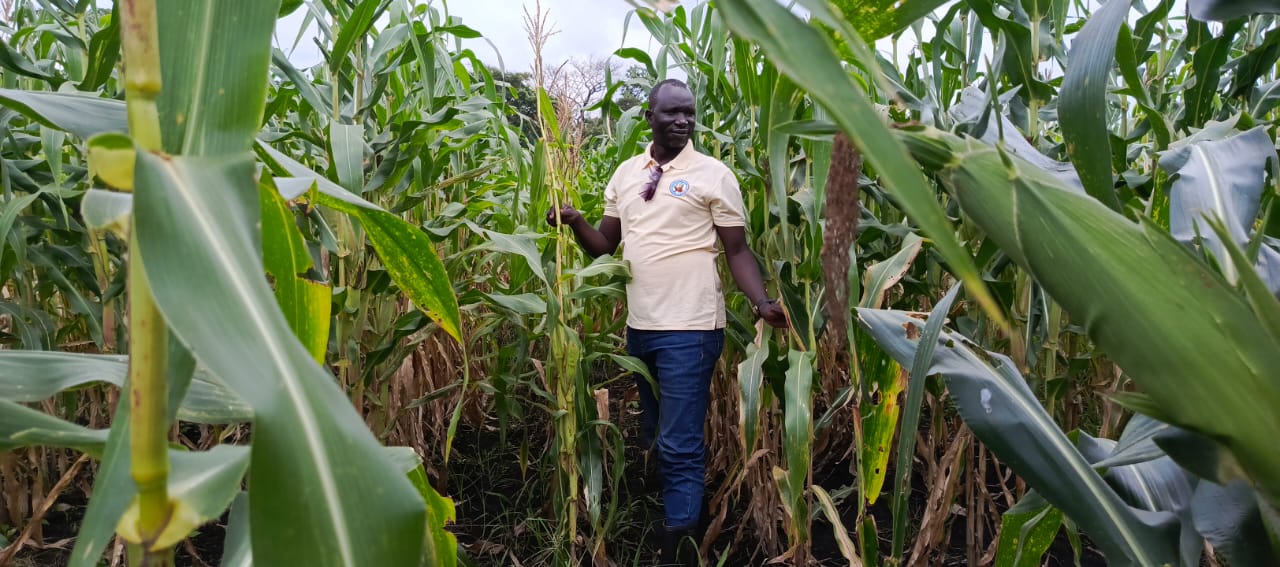
Woja Isaac at a Maize hybrid seed farm in Nzara, Aug 2025
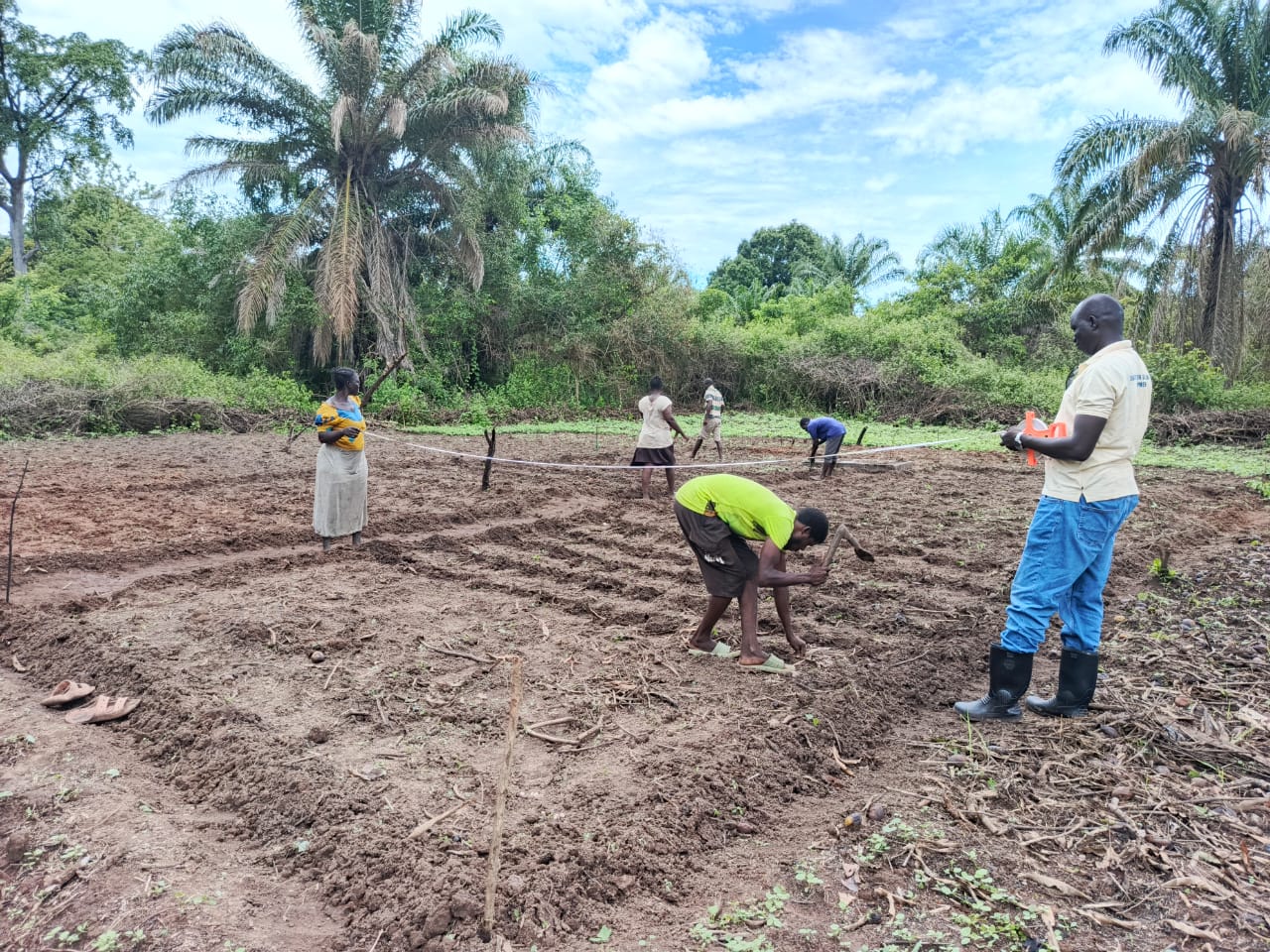
Guiding farmers in the establishment of a demo in Yambio, May 2026
“Farming Is a Business”
For Woja, the value-chain strategy is also about changing how agriculture is perceived, particularly among young people. He argues that much of the reluctance comes from the way farming is still practiced: manually, with traditional varieties and without the certainty of a market.
“It’s no longer a dirty job, it’s now a professional job.”
He points to improved varieties, mechanization and organised markets as the ingredients that can make farming more attractive—and more profitable. But he also recognizes the barrier facing young people who want to enter agriculture without the capital to clear land, hire machinery, buy seed or access fertilizer.
“For us as PRO Seed, we’re creating that opportunity for farmers and the youth to be able to access credit services so that they can invest.”
The ambition, he said, is not to create an exclusive agricultural economy, but an inclusive one. Women, youth, internally displaced people, refugees, people with disabilities and others who are willing and able to participate should have a place in it.
“If we’re going to transform the agricultural sector in this country, then everybody should be on board.”
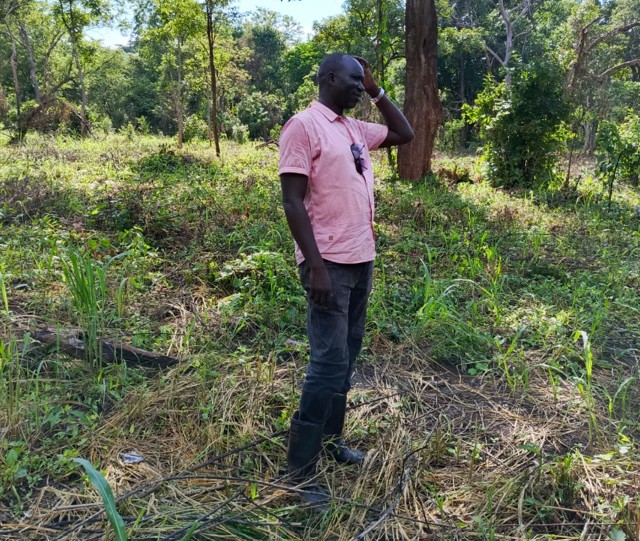
Woja Isaac inspecting opening of commercial farmland in Maridi
The Cost of Building
The vision, however, is being pursued in an operating environment that presents significant constraints. Woja identifies high operating costs, inflation and fuel prices, limited agricultural research, restricted access to finance and poor roads among the challenges confronting businesses trying to build agricultural value chains.
For a company moving inputs and grain across counties, roads are not simply an infrastructure issue. They can determine whether a farmer is reached, whether a crop moves on time and whether a market can function.
The financing challenge is equally consequential. Woja argues that local businesses often struggle to access the capital required to move from an idea or small operation into a larger commercial enterprise.
Yet he does not describe these constraints as a reason to retreat. Instead, they form part of the case for building systems that allow agriculture to become more productive, better financed and more connected.
A Business With a Social Calculation
Woja also sees the agricultural value chain through a wider social lens. In his view, creating productive opportunities for young people can contribute to stability by giving them a viable alternative to idleness and economic exclusion.
“We have the energy, we have the land, we have the resources, and we have the business for you to engage in.”
For him, commercial agriculture is therefore not only about yields and markets. It is about whether people can earn a living from productive work and build a stake in their communities.
That same human-centred thinking extends inside PRO Seed itself. Woja compares the company’s employees to parts of the human body: different in function, but equally necessary.
“There’s nobody who is less important. Everybody is very important.”
The comparison is deliberately simple. A cleaner, driver, farmer, field officer, storekeeper, milling operator or manager may occupy a different place in the organisation, but the chain depends on every link functioning.
The Ten-Year Ambition
Looking ahead, Woja’s ambition is not limited to the success of one product or one business line. He wants PRO Seed to help move farmers from subsistence production into commercial farming, develop the maize value chain and expand the country’s capacity to produce and process its own food.
“In 10 years, we’re looking into PRO Seed feeding the country. We want to stop importation of maize flour into this country because we can produce, we have the potential, we have the capacity. We simply need to get organized.”
The vision extends beyond maize. Woja points to the potential revival of the palm oil industry in Western Equatoria and sees further crop value chains as part of the company’s longer-term horizon.
For farmers outside the main centres, the ambition is also about reach. PRO Seed currently works through local leaders and field teams to reach communities in the counties where it operates, with the stated goal of expanding that footprint to willing farmers across Western Equatoria.
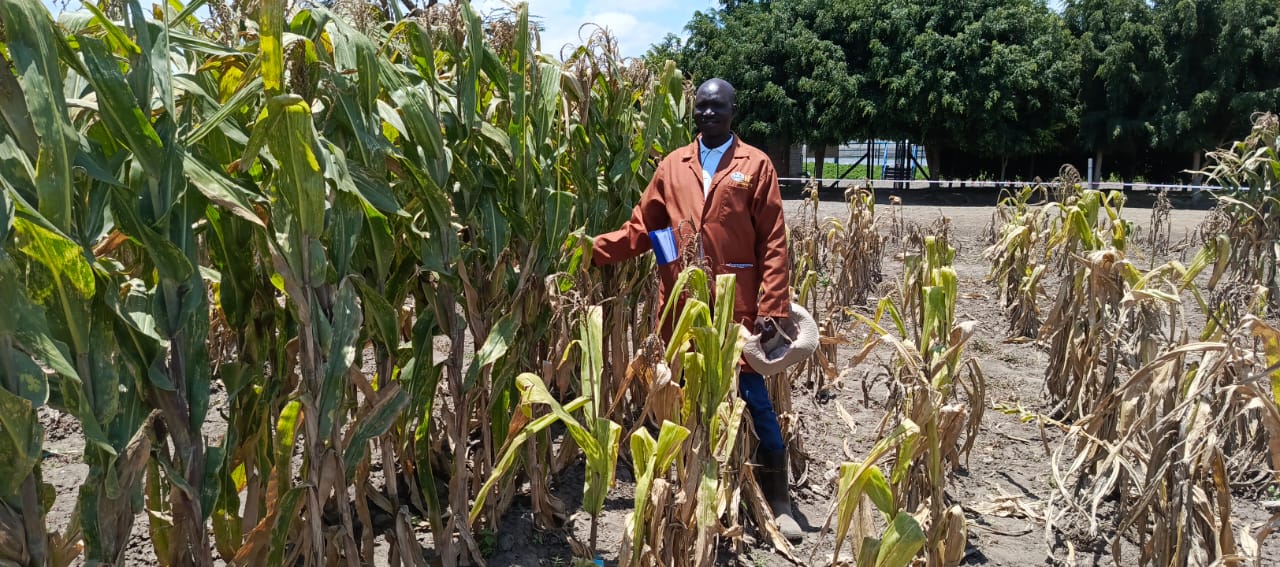
At CIMMYT research site in Naivasha, Kenya in October 2025
A Legacy Measured in Food
There is, however, a personal reason Woja continues to pursue the ambition despite the obstacles. Asked what keeps him committed when the days are long and the challenges accumulate; his answer moves away from business metrics and towards legacy.
“My legacy is to have contributed to feeding this country.”
That ambition also shapes how he thinks about research and climate resilience. PRO Seed is working with public research institutions, including CIMMYT and IITA, to access and commercialize improved varieties, while maintaining parental lines at its Gumbo maintenance site.
On land and agriculture, he argues for a balance between production and environmental stewardship: retaining strips of natural vegetation, replanting trees and using multipurpose tree species while developing varieties better able to cope with changing climatic conditions.
It brings the story back to the field—the place where every value chain begins. The seed is planted by a farmer. The crop is grown, harvested and moved. Grain is processed. A product reaches a household. Between those moments are the people, systems and decisions that determine whether agriculture remains subsistence or becomes an organised business.
“I want to feed the country profitably.”
For Woja Isaac Enoch, that sentence is both a business objective and a personal measure of what PRO Seed could leave behind. The journey from hybrid seed to household flour is still being built, one farmer, one field and one link in the value chain at a time.