25 Bags, One Feddan, a Bigger Dream: Alice Gordon Zuzu’s Story
By Alan Clement Communications Officer, PRO Seed Ltd.
Farmers’ Voice | Youth-in-Work
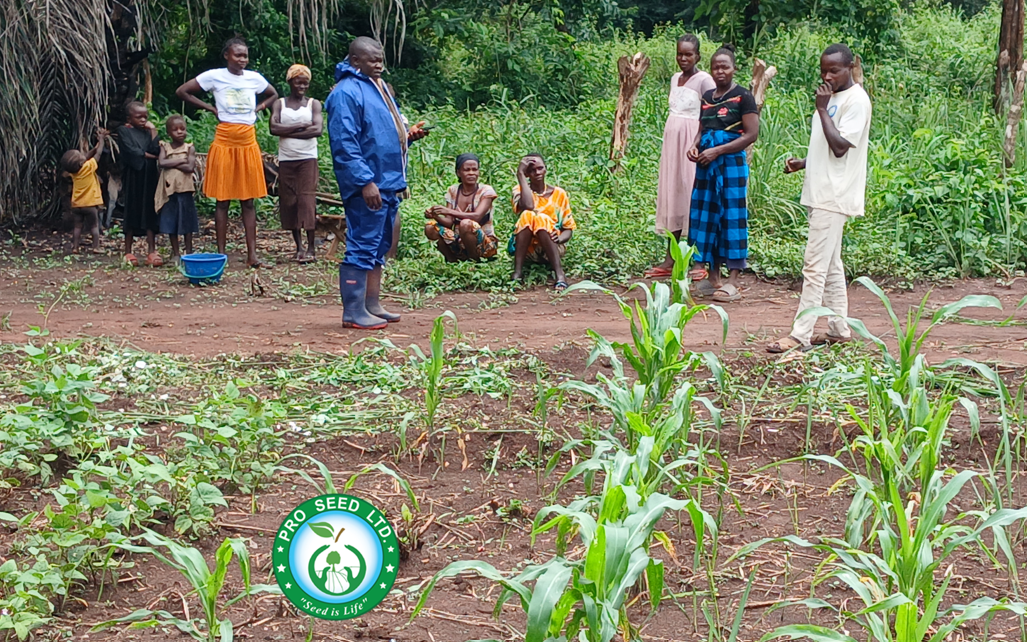
Alice (in square wrapper) attending a Demo farm activity | Photo credit Alan
Alice Gordon Zuzu harvested 25 bags of maize, each weighing 50 kilograms, from one feddan of land last year. But the harvest brought a problem that growing the crop had not solved: she could not find enough buyers. Some of her grain spoiled while she struggled to sell it.
At 25, Alice has already spent 15 years learning the demands and possibilities of farming. What began when she was just 10 years old has gradually developed into an important part of her life, giving her practical experience, a source of livelihood and, increasingly, a vision of what she hopes to achieve in the future.
Her farming journey has not been without challenges. While she has experienced the satisfaction of a good harvest, she has also encountered one of the difficulties that continues to affect many smallholder farmers: finding a reliable market for their produce.
For Alice, producing maize is only one part of the farming process. Being able to sell what she harvests, receive payment and put that income to productive use is equally important.
Her experience from the previous farming season illustrates this reality.
One feddan, 25 bags and a lesson in farming
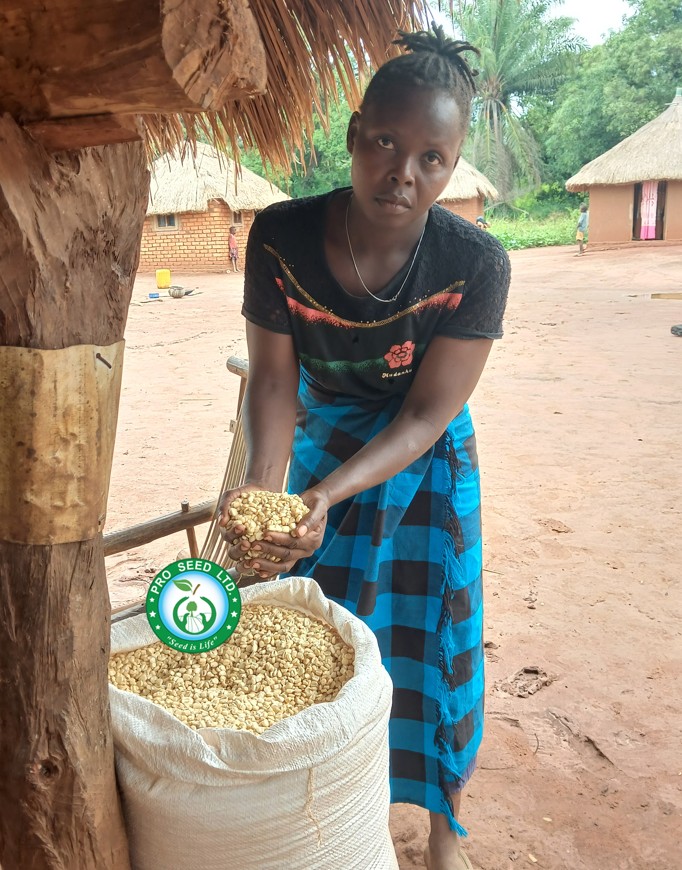
Alice showing off part of her last year’s harvest | Photo credit Alan
Alice traces her farming journey to Nambaga, where she began cultivating land at a young age. Over the years, she has gained experience through preparing land, planting and harvesting, gradually developing an understanding of what it takes to produce a successful crop.
Last year, she identified a piece of land that she considered suitable for cultivation. She cleared it, prepared the field and planted maize using local seed, ensuring that planting was done at the appropriate time.
The result exceeded her expectations.
From just one feddan, Alice harvested 25 bags of maize, each weighing 50 kilograms of maize from the cultivated plot. It was an encouraging result, particularly given that she had used local seed variety.
Reflecting on that experience, she explained that her previous harvest became a major source of motivation for joining the PRO Seed’s Youth-in-Work programme.
Her interest in the programme did not begin with a failed crop. It began with a harvest she considered successful, followed by difficulty finding a market for it.
“Now, if that local seed can do like that, what of hybrid?” _ Alice
For Alice, the opportunity to access hybrid maize seed represents a chance to build on what she has already achieved. Having experienced a productive harvest, she is interested in exploring how improved seed, combined with appropriate farming practices, could help her increase production.
Her ambition is not simply to cultivate land every season, but to improve the returns she gets from her efforts.
A harvest without enough buyers
Despite the encouraging harvest, Alice’s experience last year also exposed a major weakness in her farming practice. She struggled to find buyers for her maize.
Although she had successfully produced 25 bags, selling the harvest proved difficult. She was unable to sell all the grain, and some of it eventually spoiled while she struggled to find a market.
“I was struggling last year selling the grains.” _ Alice
This experience left her with an important lesson: a good harvest does not necessarily translate into better income if farmers cannot access buyers when they need them.
For smallholder farmers, the period after harvesting can be just as challenging as the months spent preparing land, planting, weeding and managing crops. Without reliable buyers, farmers may be forced to hold their produce for extended periods, exposing it to the risk of deterioration and potential losses.
Alice understands this challenge from personal experience.
Her interest in the current programme is therefore driven by two important expectations: access to improved hybrid seed and better market opportunities for her grain.
She sees the prospect of a structured market through PRO Seed as an opportunity to address the difficulties she encountered in the previous season.
“Now, PRO Seed will bring market to the grains. So that aspect of bringing the market motivates me, because I was struggling last year selling the grains.” _ Alice
She hopes that instead of spending considerable time searching for buyers, she will be able to bring her harvested maize to an organised buying point where buyers can purchase it.
For her, this would make a significant difference.
From selling difficulties to planning for the future
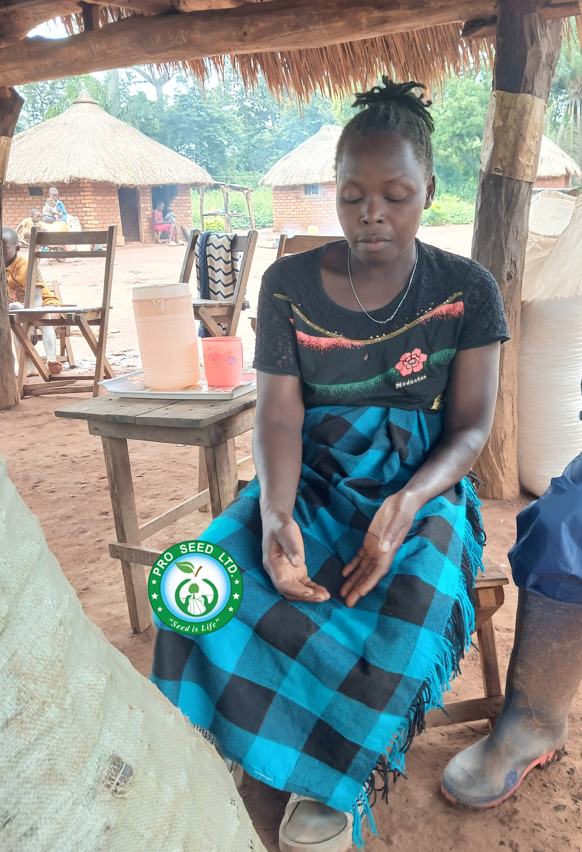
Alice narrating her farming journey | Photo credit Alan
One of the most important things Alice hopes to gain from improved market access is greater control over the income generated from farming. She explained that the anticipated arrangement, where farmers can sell their grain and receive payment in cash, would allow them to plan their finances more effectively.
With money from the harvest, she hopes to set aside portions for different priorities, including tuition fees, cultivation costs and purchasing grain for future farming activities.
This is particularly important because farming requires continuous investment. Farmers must think beyond one harvest and consider how to finance the next production cycle while also meeting their household needs.
For Alice, a more predictable selling arrangement could help her balance these competing priorities.
“You will plan your money wisely.” _ Alice
Rather than having her harvest sitting unsold while some of the grain risks going to waste, she hopes to convert her produce into income that can be put to practical use.
Her expectations point to a broader issue in agricultural development: increasing production is important, but connecting farmers to markets is equally necessary if agricultural activity is to generate meaningful economic benefits.
A farmer may invest time, labour and resources in producing a good harvest, but without an effective route to market, much of that effort may fail to deliver the expected returns.
Looking beyond the next harvest
At 25, Alice is already looking beyond the immediate farming season. When asked where she sees herself in the next two to three years, her response reflected an expectation of increased income and greater ability to pursue her plans.
She believes that improved access to hybrid seed and the opportunity to earn more from her agricultural production could provide the resources she needs to achieve some of her ambitions.
“In the next two to three years, I see that my income will increase, and the other things that I am planning to do, I can be able to do them because the resources will be there.”
Her vision is rooted in the relationship between production, market access and income. For her, these are not separate issues. They are connected parts of a farming enterprise that she wants to grow.
The previous season demonstrated that she could achieve a substantial harvest from a relatively small plot of land. However, the difficulty of selling that harvest limited the benefits she could derive from it.
Now, she is looking forward to a different experience, one in which improved seed can support production and better market arrangements can help her turn that production into income.
Whether these expectations translate into the results she hopes for will depend on the season ahead, the performance of the seed, appropriate crop management and the effectiveness of the market arrangements.
Nevertheless, her willingness to build on her previous experience demonstrates a determination to improve her farming activities.
More than a harvest
Alice’s story highlights an important reality for smallholder farmers: agricultural progress cannot be measured by production alone.
Her previous harvest of 25 bags from one feddan was an encouraging achievement. Yet, the difficulty of finding buyers and the loss of some grain showed that increased production must go hand in hand with access to markets.
Through the current programme, she hopes to benefit from improved hybrid maize seed and a more organised market for her grain. These opportunities, if successfully realised, could help her increase production, improve her income and make better plans for the future.
Her journey from a 10-year-old who started farming in Nambaga to a 25-year-old farmer looking towards greater opportunities reflects years of practical experience and a growing ambition.
For Alice, the bigger dream is not simply to harvest more maize. It is to become a farmer whose hard work translates into better income, greater financial stability and the ability to pursue the plans she has for her future.
Twenty-five bags gave her a reason to believe in what farming could achieve. Now, she is looking towards improved seed and better market access to take that belief further.